

One of the most common questions chicken keepers ask is how much space their feathered friends really need. Whether you’re planning your first coop or wondering how many extra hens would fit your current setup, let’s explore how to create an environment where your chickens can spread their wings and live their best lives.
Coop Size: Creating a Comfortable Home
Your chickens’ coop is their bedroom and shelter, protecting them from weather and predators while providing a safe place to roost and lay eggs. The space they need depends on the size of your chickens.
Standard-sized chickens need at least 4 square feet (0.37 square meters) of floor space each inside the coop. These are breeds like Rhode Island Reds, Plymouth Rocks, or Sussex – the classic chicken breeds you might picture when thinking of a backyard flock.
If you’re keeping standard-sized chickens, here’s how much space they need in the chicken coop:
- Coop size for 4 chickens: 16 square feet (1.5 square meters)
- Coop size for 6 chickens: 24 square feet (2.2 square meters)
- Coop size for 8 chickens: 32 square feet (3 square meters)
- Coop size for 12 chickens: 48 square feet (4.5 square meters)
- Coop size for 15 chickens: 60 square feet (5.6 square meters)
Here’s a quick size guide based on chicken types:
- Recommended space for large breeds (like Brahmas or Jersey Giants): 5 square feet (0.46 square meters) per bird
- Recommended space for standard breeds (like Rhode Island Reds or Plymouth Rocks): 4 square feet (0.37 square meters) per bird
- Recommended space for bantams (like Silkies or Dutch Bantams): 3 square feet (0.28 square meters) per bird
Don’t forget – these are minimum requirements. Going bigger isn’t just good for your chickens; it makes your life easier too! For instance, a tall coop doesn’t just provide extra roosting space, it also gives you enough height to stand comfortably while cleaning. More floor space means less cleaning.
Nesting Box Dimensions
Your hens need properly sized nesting boxes to lay their eggs comfortably. A good rule of thumb is one box for every 3-4 hens, and we recommend starting with a minimum of two nesting boxes (even if you only have three hens, two of them might want to lay at the same time).
Here are the ideal dimensions:
- Standard breeds: 12 x 12 x 12 inches (30 x 30 x 30 centimeters)
- Large breeds: 14 x 14 x 14 inches (35 x 35 x 35 centimeters)
- Bantams: 10 x 10 x 10 inches (25 x 25 x 25 centimeters)
Chicken Run: Room to Move
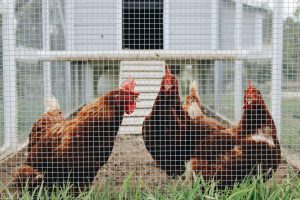
While the coop is for sleeping and laying eggs, your chickens need plenty of space to stretch their legs during the day. Each chicken should have at least 25 square feet (2.3 square meters) of run space. This gives them room to do all their favorite chicken things – scratching, dust bathing, and hanging out with their flock mates.
A properly sized run helps prevent several common issues:
- Better soil quality – the ground doesn’t get overused
- Reduced odors and easier maintenance
- Less competition for resources
- Decreased risk of illness spreading through the flock
The run should include enrichment features like dust bathing areas, scratch spots, and places to take shelter from sun or rain. Adding some branches or a sturdy ladder creates different levels for chickens to explore, effectively increasing the usable space without expanding the run’s footprint.
Note that these are minimum recommended space requirements for a healthy and happy backyard flock. Of course, commercial setups won’t allow for this much space – it’s perfectly possible to keep hens sitting on top of each other, and without additional room to scratch or bathe. However, such a setup causes high amounts of stress in chickens, and the only way to keep them healthy in a crowded environment is through daily cleaning and regular medication (including parasite treatment). This website is not a guide to raising battery hens though, as this is far from the natural and healthy way of keeping chickens we practice and recommend.
Free-Range Space: The Ultimate Freedom
Want to let your chickens free-range? They’ll need about 100 square feet (9.3 square meters) per bird to prevent overgrazing and maintain healthy ground cover. Don’t let this number scare you – your chickens won’t use all areas equally. They’re creatures of habit and tend to create favorite spots for different activities.
One great way to let your chickens (semi) free range while keeping them safe from predators and preventing overgrazing, is to use a mobile chicken run, for instance by using electrical chicken wire – or building a run you can lift and move. We will explore different types of mobile chicken coops and run setups in future articles.
Making the Most of Limited Space
Working with a smaller space? No worries! There are plenty of ways to make the most of what you have. Here are some clever space-maximizing strategies:
- Create different levels in the run with sturdy branches or ramps. You could even grow bushes or small trees inside your coop. If you do this, make sure it doesn’t enable your chickens to fly the coop!
- Add hanging treats, pecking blocks, or other toys for your chickens
- Install multiple feeding and watering stations
- Set up one or more dust-bathing areas
Signs Your Chickens Need More Space
Your chickens will let you know if they’re feeling cramped. Watch for these signs:
- Increased aggression or pecking: when chickens feel crowded, they might start bullying each other to secure their personal space
- Reduced egg laying: stress from overcrowding can affect egg production
- Destruction of ground cover: too many chickens in a small space will quickly turn any vegetation into bare dirt
- Strong odors from the coop or run: overcrowding leads to waste buildup that’s harder to manage
- Dirty or damaged feathers: in cramped spaces, chickens might accidentally damage each other’s feathers while moving around, or feathers can get soiled more easily
- Stressed or lethargic behavior: happy chickens are active and curious – if they’re looking sluggish, they might need more room to move
Planning for the Future
There are two smart approaches to planning your chicken space:
The first is to start with a larger setup than you currently need, giving you room to grow your flock later.
The second option? Start smaller but plan strategically. That first small coop can become incredibly useful later as a hospital coop for sick chickens, a maternity ward for broody hens, or a quarantine space for new additions to your flock after you’ve moved your main flock to a larger setup.
Creating a Balanced Environment
Creating the perfect chicken space isn’t just about square footage – it’s about making a home where your chickens can thrive. Focus on quality over quantity, and make sure your space includes all the essentials: shelter, feeding areas, dust baths, and places to explore and forage. With some thoughtful planning, even modest-sized areas can become a chicken paradise.


0 Comments